 Przejdź do treści
Nike - Kariatyda
Exhibition "The Scale of Memory" 19.09.2026-19.09.2028 Centre of Polish Sculpture in Orońsko, Poland
Project selected through an international open call registration. VII Edition of the International Symposium of Contemporary Sculpture in Orońsko.
Instalacja przestrzenna na styku rzeźby i architektury, która bada różne skale pamięci – od osobistego doświadczenia po pamięć zbiorową zapisaną w historii i materii.
Zobacz proces
Day 10 - The Opening
Day 9
Day 8
Day 7
Day 6
Day 5
5 days left to the opening! I started work at 7 AM and finished at midnight. I'm starting to feel like I'm in a trance..
Day 4
Zostało już tylko 6 dni!
Dzień 3
Już tylko 7 dni pozostało do wernisażu wystawy "Skala Pamięci" w Centrum Rzeźby Polskiej w Orońsku!
Dzień 2
Dzień 1
Zaczynam zaplatać liny.
Krok pierwszy - Zbieranie lin wspinaczkowych
Spędziłam ponad miesiąc dzwoniąc, wysyłając wiadomości i spotykając się z alpinistami.
Idea
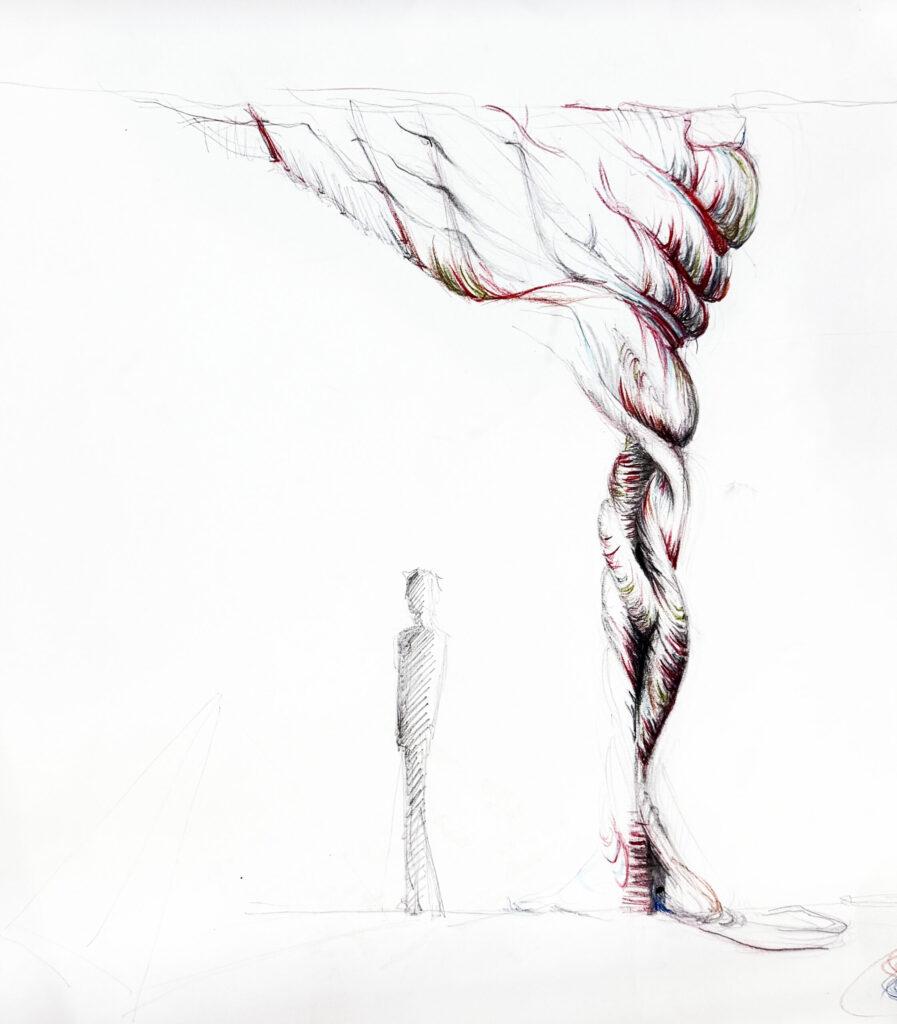
Forma rzeźby nawiązuje do obrazu I Saw Three Cities Kay Sage. Z jednej strony przywołuje skojarzenia z Nike, boginią zwycięstwa, z drugiej stanowi filar wspierający i tym samym nadaje kobiecie rolę kariatydy. Połączenie tych dwóch elementów definiuje kobietę jako źródło siły i wsparcia w procesie odkrywania świata
Kilkumetrowa forma przypominająca fragment unoszącej się ku górze tkaniny wyrasta z trzech kłębów splecionych ze sobą lin wspinaczkowych, które stopniowo przechodzą w jedną strukturę. Forma pozostaje w napięciu pomiędzy ciężarem a lekkością, materią i ruchem, przywołując ślad nieobecnej postaci. Trzy splatające się elementy odwołują się do różnych wymiarów pamięci – osobistej, rodzinnej i zbiorowej – które wzajemnie się przenikają i tworzą wspólną historię.
Budulcem instalacji byłyby używane liny wspinaczkowe należące do wybitnych polskich alpinistów. Każda z nich opatrzona byłaby etykietą zawierającą nazwę zdobytej góry, nazwisko wspinacza oraz imię kobiety, której obecność, codzienna praca i wsparcie były częścią tego osiągnięcia. Informacje te ujawniałyby się dopiero z bliska, pozwalając odkrywać indywidualne historie wpisane w większą opowieść.
Wybranie tej szczególnej dziedziny ma dla mnie wymiar osobisty. Jestem córką himalaisty Przemysława Piaseckiego, zdobywcy K2. W tym roku byłam u podnóża tej góry i doświadczenie to stało się inspiracją do rozważań nad śladami, jakie pozostawiają ludzie, wydarzenia i relacje. Interesuje mnie również związek rzeźby z architekturą. Tak jak człowiek wyrasta w określonym środowisku, kontekście kulturowym i historycznym, tak również pamięć nie istnieje w próżni. Kariatyda jest elementem podtrzymującym konstrukcję, podobnie jak pamięć podtrzymuje naszą tożsamość.
Projekt nawiązuje do wyjątkowego dziedzictwa polskiego himalaizmu i osiągnięć Lodowych Wojowników, ale przede wszystkim jest próbą przywrócenia pamięci o tych, których obecność pozostaje niewidoczna. Aleksandra odkrywa historie kobiet – matek, żon, partnerów i córek – których codzienność i wsparcie współtworzyły wielkie osiągnięcia, choć rzadko stawały się częścią oficjalnej narracji. Granica pomiędzy historią a symbolem, pomiędzy tym, co zapisane, a tym, co istnieje jedynie jako echo czyjejś obecności, wydaje jej się szczególnie istotna.
Używane liny wspinaczkowe zachowują ślady czasu, wysiłku i drogi. Każda z nich jest świadectwem konkretnego doświadczenia, ale dopiero splecione razem tworzą całość. Monumentalna forma rzeźby staje się próbą nadania materialnej postaci pamięci – tej osobistej, rodzinnej i zbiorowej. Pojedyncze historie splatają się w tkankę kultury i trwają dłużej niż ich bezpośredni świadkowie. To, co pozostaje niewidoczne, często okazuje się fundamentem tego, co trwa najdłużej.
Mountaineers who have supported the project by donating their ropes:
Andrzej Bargiel, Kinga Baranowska, Jarosław Botor, Mariusz Hatała, Marcin Kaczkan, Waldemar Kowalewski, Piotr Krzyżowski, Wojciech Kurtyka, Maciej Pawlikowski, Ryszard Pawłowski, Przemysław Piasecki, Zbigniew Skierski, Piotr Snopczyński, Robert Szymczak, Anna Okopińska, Krzysztof Wielicki, Ludwik Wilczyński, Dariusz Załuski, Bartek Ziemski.
Climbers whose ropes were handed down by their heirs:
Halina Krüger-Syrokomska, Jerzy Kukuczka, Andrzej Zawada
