 Skip to the content
NIKE – CARYATID
Series: Caryatids
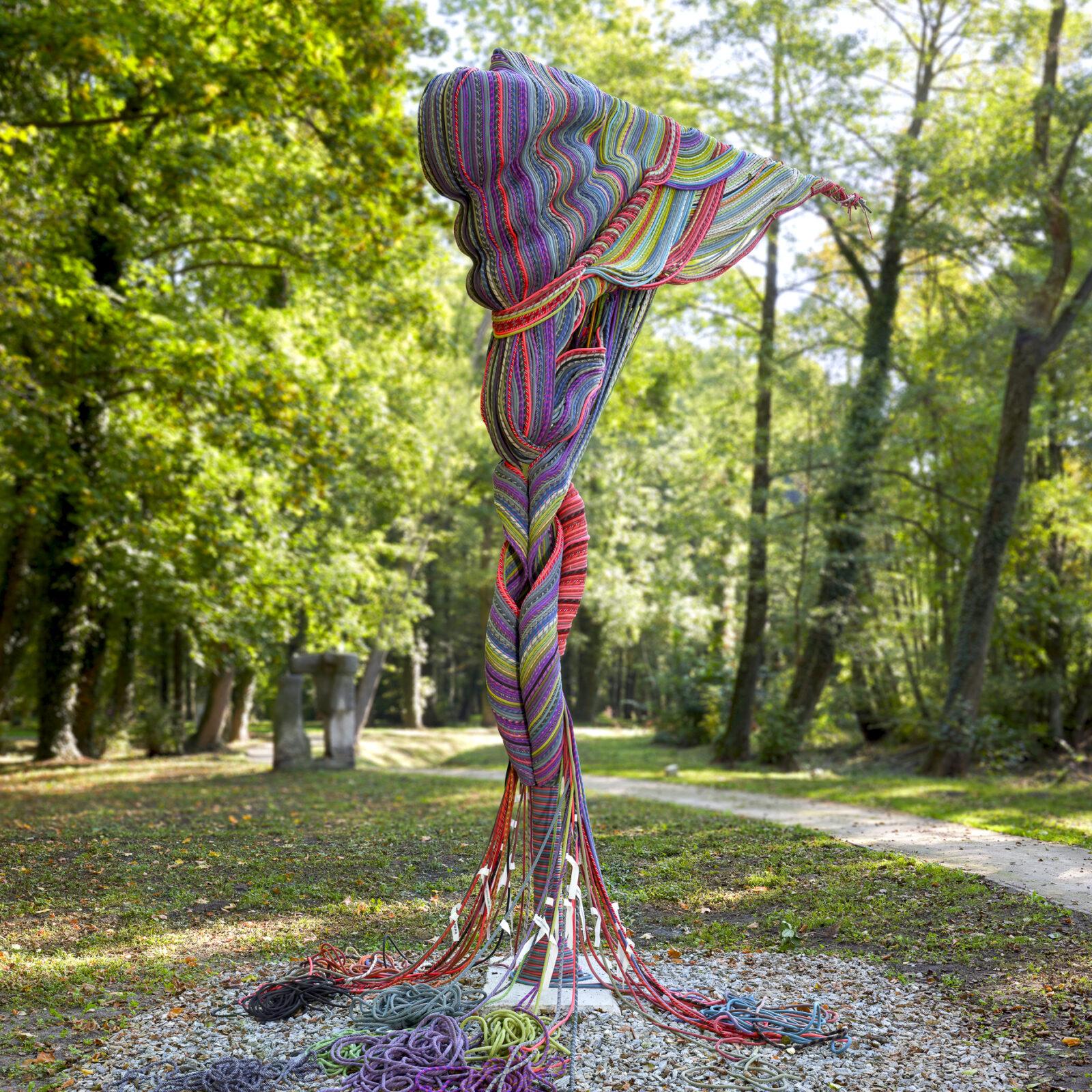
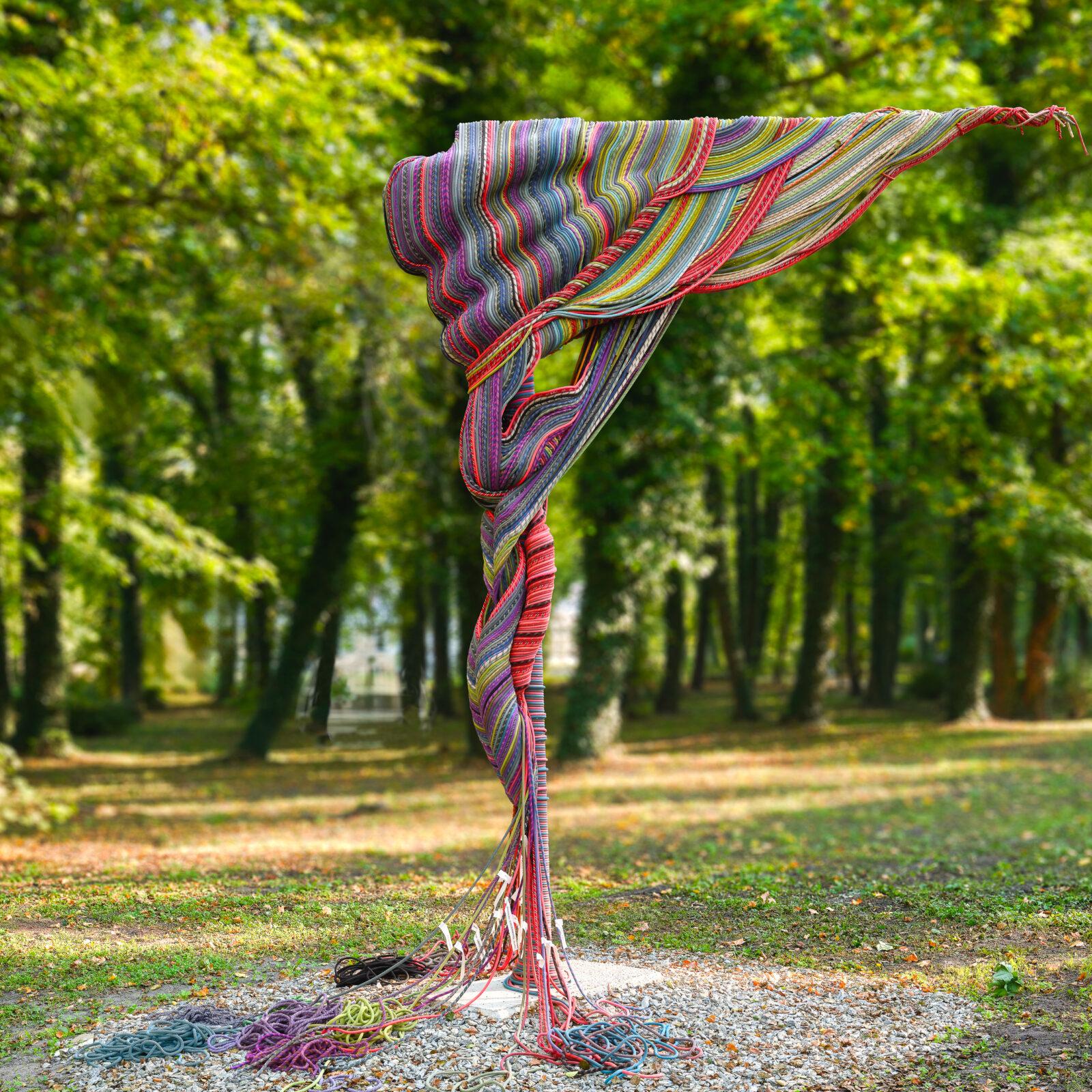
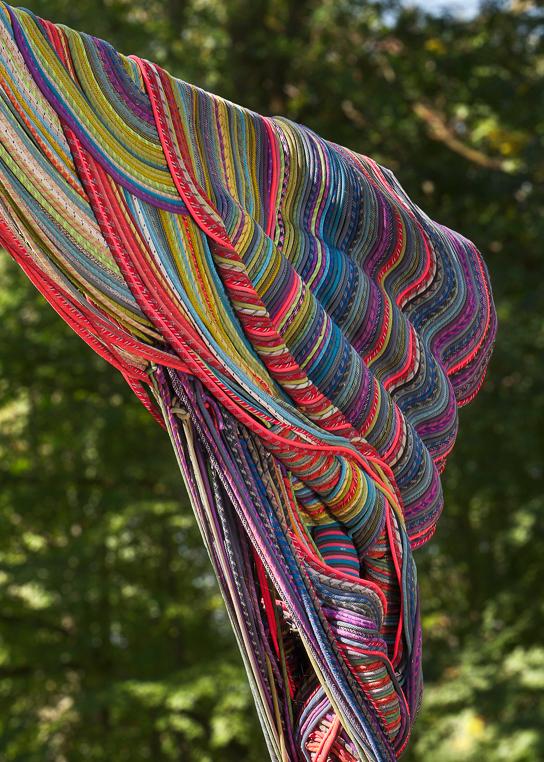
Nike – Caryatid, an installation at the intersection of sculpture and architecture, composed of used climbing ropes of renowned Polish mountaineers, explores different scales of memory — from personal experience to collective memory inscribed in history and matter.
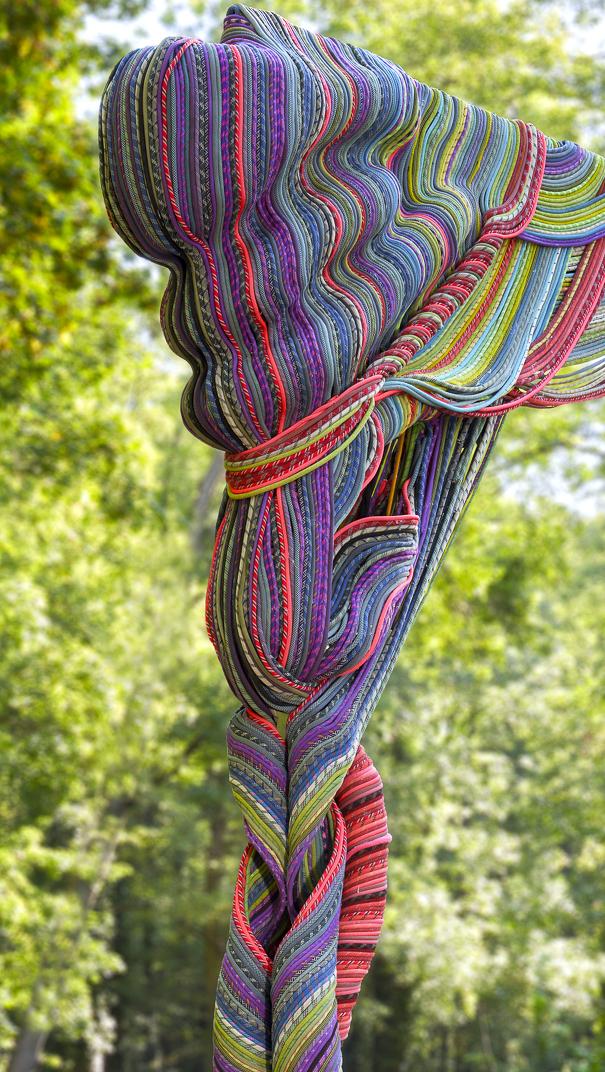
The form of the sculpture refers to Kay Sage’s painting I Saw Three Cities. On the one hand, it evokes associations with Nike, the goddess of victory; on the other, it takes the form of a supporting pillar, thereby giving the woman the role of a caryatid. The combination of these two elements defines the woman as a source of strength and support in the process of discovering the world.
… read more
The several-metre-high form, resembling a fragment of fabric rising upwards, emerges from three bundles of intertwined climbing ropes that gradually merge into a single structure. The form remains in tension between heaviness and lightness, matter and movement, evoking the trace of an absent figure. The three intertwined elements refer to different dimensions of memory – personal, familial and collective – which interweave and create a shared history.
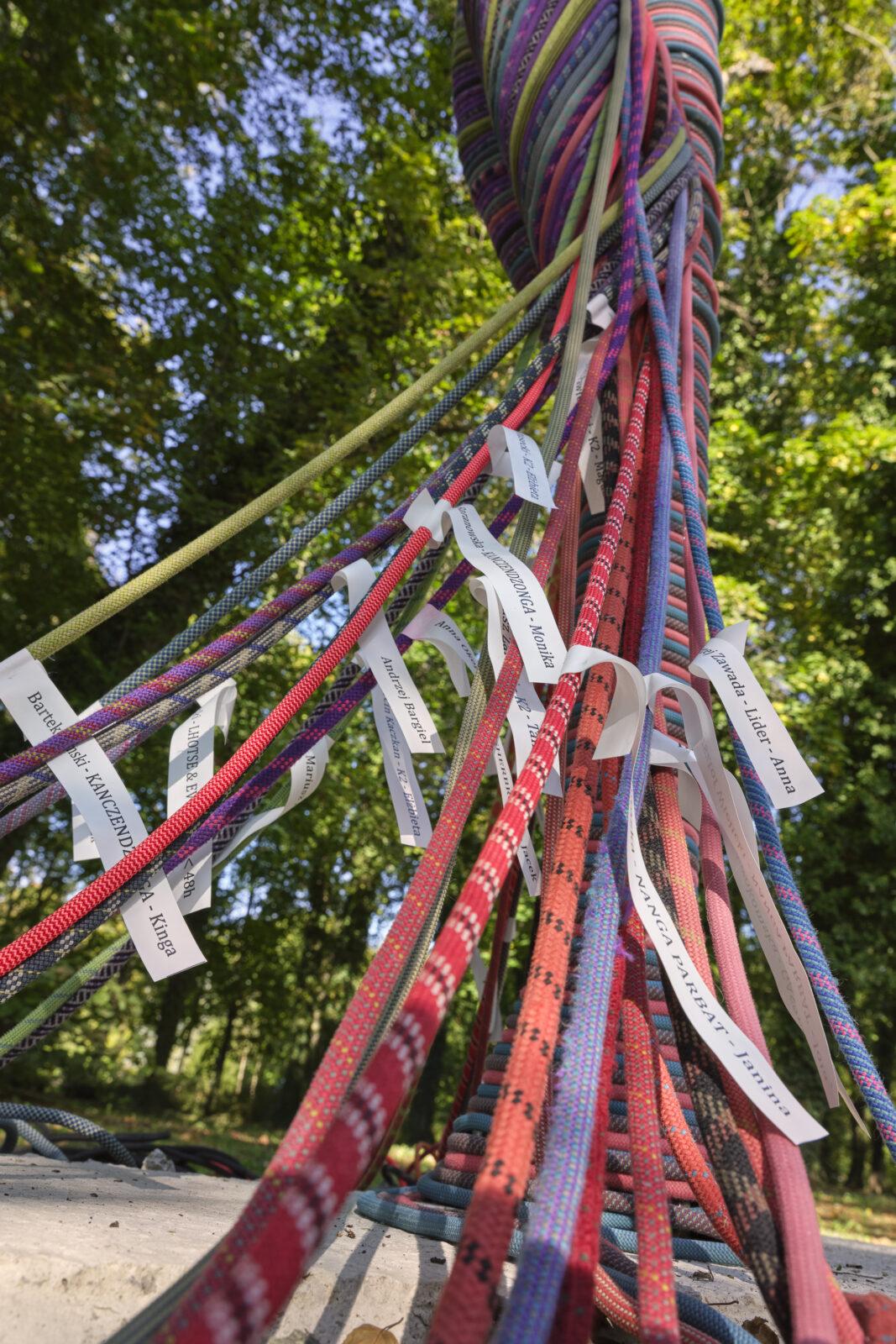
The installation is made from from used climbing ropes belonging to outstanding Polish mountaineers. Each rope is labelled with the name of the mountain climbed, the climber’s name, and the name of the woman whose presence, daily work and support were part of that achievement. This information is only visible up close, allowing individual stories embedded within a larger narrative to be discovered.
Choosing this particular field has a personal dimension for Aleksandra Piasecka. She is the daughter of mountaineer Przemysław Piasecki, who climbed K2 (Magic Line in 1986). This year, she visited the foot of the mountain, and the experience inspired her to reflect on the traces left by people, events and relationships.
She is also interested in the relationship between sculpture and architecture. Just as a person grows within a particular environment and cultural and historical context, memory also does not exist in a vacuum. A caryatid is an element that supports a structure, just as memory supports our identity.
The project refers to the exceptional heritage of Polish Himalayan mountaineering and the achievements of the “Ice Warriors”, but above all, it is an attempt to restore the memory of those whose presence remains invisible. Piasecka uncovers the stories of women – mothers, wives, partners and daughters – whose everyday lives and support contributed to great achievements, although they rarely became part of the official narrative. The boundary between history and symbol, between what is recorded and what exists only as an echo of someone’s presence, seems particularly significant to her.
Used climbing ropes retain traces of time, effort and the journey. Each one bears witness to a specific experience, but only when intertwined do they form a new whole. The monumental form of the sculpture becomes an attempt to give material form to memory – personal, familial and collective. Individual stories intertwine to form the fabric of culture and endure longer than their immediate witnesses. What remains invisible often proves to be the foundation of what lasts the longest.
Project selected through an international open call registration and realised as part of the 7th International Symposium of Contemporary Sculpture in Orońsko.
Series: Caryatids
Used climbing ropes belonging to outstanding Polish Himalayan mountaineers. Andrzej Bargiel, Kinga Baranowska, Jarosław Botor, Mariusz Hatała, Marcin Kaczkan, Waldemar Kowalewski, Piotr Krzyżowski, Wojciech Kurtyka, Maciej Pawlikowski, Ryszard Pawłowski, Przemysław Piasecki, Zbigniew Skierski, Piotr Snopczyński, Robert Szymczak, Anna Okopińska, Krzysztof Wielicki, Ludwik Wilczyński, Dariusz Załuski, Bartek Ziemski. Climbers whose ropes were handed down by their heirs: Halina Krüger-Syrokomska, Jerzy Kukuczka, Andrzej Zawada 2026
400x230x70
